How a Cut Nerve Heals After Repair

⌚️ read time: 4 minutes
One of the coolest things about being a hand surgeon is that we are one of the few types of surgeons trained to repair cut nerves. I find many patients assume that once a nerve is cut, it can’t be repaired. It never gets old to be able to correct the patient’s assumption and give them the hope of a successful nerve repair.
When I repair a cut nerve, the most important number I give the patient is this: about an inch a month. That's roughly how fast a nerve regrows, and understanding it explains nearly everything about the long, patience-testing road ahead. Sewing the nerve back together is the quick part. The healing is measured in months, and sometimes the better part of a year.
If you've cut a nerve, usually from a deep laceration on glass, a knife, or a sharp edge, this is the article for you, because realistic expectations are half the battle.
A nerve is a bundle of living wires
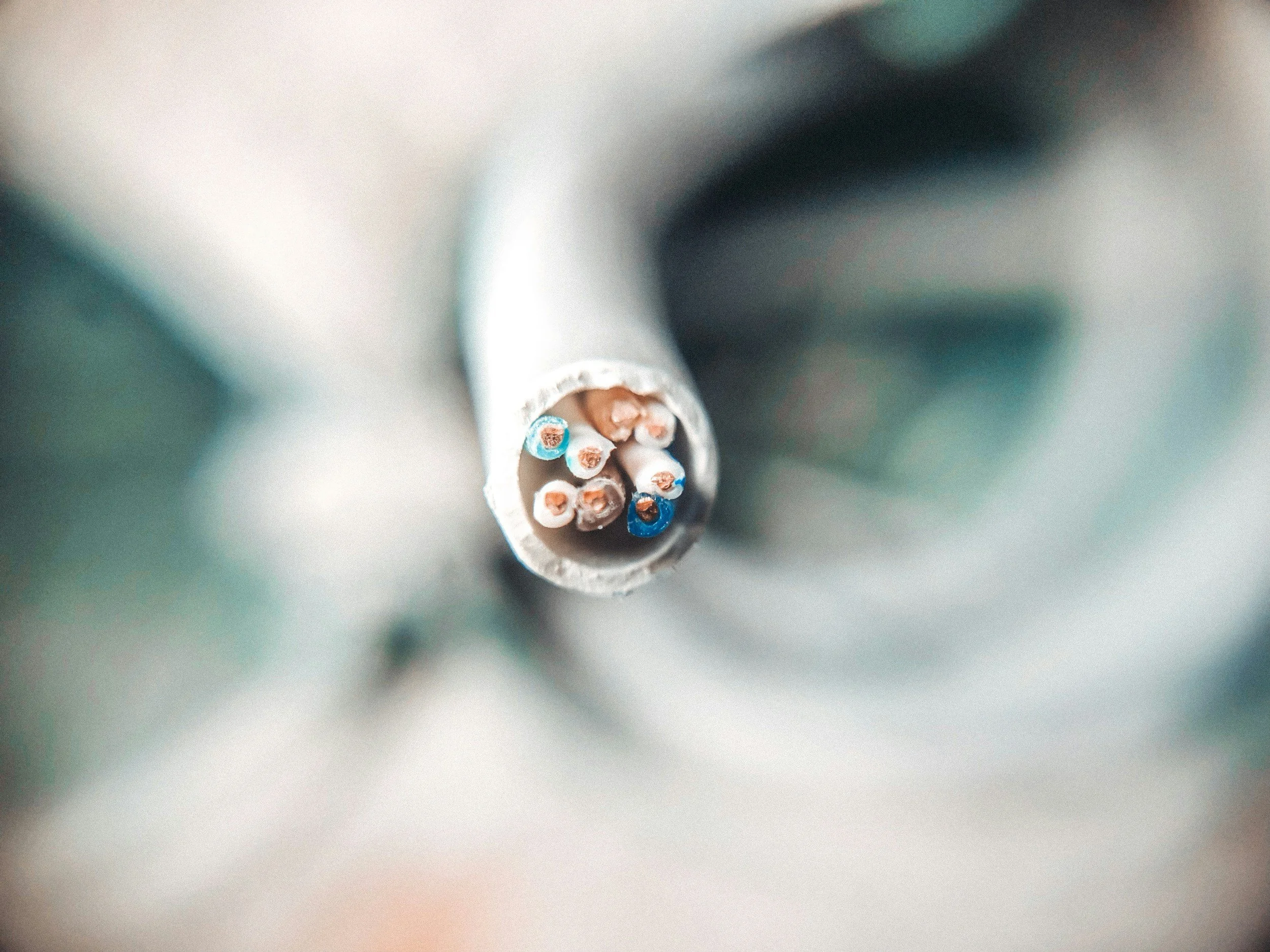
Picture a nerve as a thick cable packed with thousands of tiny individual wires, each one running from your spinal cord all the way out to a patch of skin or a single muscle. Some of those wires carry orders outward, from your brain to your muscles (motor nerves). Others carry information back to the brain — touch, temperature, pain (sensory nerves). When everything's intact, the signals travel at remarkable speeds. Your brain tells your hand to close, and it closes. You touch something hot, and you know it instantly.
When the cable is cut, all of that traveling information stops getting through. You're left with numbness, weakness, or both, depending on what those particular wires were responsible for before they were cut.
Not all nerve injuries are the same
Before we get to repair, it's worth knowing there's a whole spectrum of nerve injury, and where you land on it determines almost everything that follows.
At the mildest end, a nerve just gets squashed for a while, like when your arm falls asleep after you've slept on it wrong. Nothing is broken. The signal can't get through for a moment, but give it time and it recovers completely.
In the middle, the inner wires themselves get disrupted while the outer tubes and channels they run through stay intact. The fibers die back and have to regrow from scratch, but because the outer scaffolding survived, they have a relatively easy roadmap to follow. Recovery is possible, just slower and harder to predict.
At the severe end, the cable is completely cut. Every layer severed. Without intervention, nothing recovers on its own. That's where the surgeon come in.
The repair
When a nerve is cut, usually from a deep laceration at the wrist or forearm, I can find the two ends, prepare them, and sew them back together under a microscope. If you’ve heard the rumors, they’re true. The sutures I use for this are smaller than a human hair.
Here's the crucial part to understand. I'm not reconnecting each microscopic wire within the cable. With our current technology, that's not possible. What I do instead is line up and stitch the outer cable casing precisely, like aligning two ends of a PVC pipe, so the wires inside have the best possible chance to find their way across the gap and regrow down the correct channels. The goal is a tension-free repair in a healthy wound bed where healing can actually happen.
The clock starts at the moment of injury
This is the part people underestimate. Time matters enormously, and not only because of that slow inch-a-month pace.
The muscles that a nerve controls have a shelf life. If they sit without any nerve input signal for roughly eighteen months, the connection point between nerve and muscle degrades for good. The muscle fibers then pack up shop and disappear. There’s not a surgery on the planet that can bring them back.
So the regrowing nerve fibers aren't just racing a long distance, they're racing a clock. Early is always better than late. The best outcomes from surgery always occur when repair happens within days to weeks of an injury, not months.
When the gap is too big
Sometimes the cut ends are too far apart to sew directly back together. In that case, I can bridge the gap with a graft, a segment of a less critical sensory nerve borrowed from elsewhere in the body (or more commonly these days, from processed cadaver tissue called an allograft) and used as a living bridge.
For certain severe injuries, where the nerve has a very long way to travel following repair and the clock is almost sure to run out, there's a more counterintuitive approach called a nerve transfer. Instead of waiting for fibers to crawl the entire distance, I do surgery closer to the downstream muscle target and reroute a redundant nerve branch from a nearby working nerve directly to the target muscle. It sounds strange, borrowing from one nerve to rescue another, but this technique (when it’s possible) has genuinely changed recovery for patients with devastating nerve injuries.
Why it takes so long, and why it tingles
After repair, the wires on the far side of the cut die back, and fresh fibers have to sprout from the repair site and crawl all the way out to their destination at that famous millimeter a day (or inch per month). So if you cut a nerve at the wrist, sensation may take many months to reach the fingertip, simply because of the distance.
Unfortunately, nerve repair is not just like plugging the cord back into the wall.
Recovery also tends to arrive in a predictable order, which makes the wait less disorienting once you know it. Pain sensation usually comes back first, then temperature, then touch. Your sense of where your hand is in space comes later, and the ability to move comes last of all (if a motor nerve was cut).
Along the way you'll feel tingling, buzzing, and little electric zaps, often set off by tapping over the healing nerve. Counterintuitively, that's good news. Those sensations are the front line of regrowing fibers announcing their progress. We even have a name for it — the advancing Tinel sign — and by tracking where the tingling reaches at each visit, we can literally follow the nerve's progress down the arm over the months.
Why the result is often not quite the original
I'm always honest with patients about this. A repaired nerve rarely returns to one hundred percent, and the reason is that wire-sorting problem. As the fibers regrow, some inevitably wander into the wrong channels. A fiber that used to serve one portion of the fingertip might end up wired to a slightly different spot.
That mis-wiring is why repaired sensation often feels a little off, why the brain has to relearn what the signals mean, and why a dedicated process called sensory re-education with a hand therapist makes such a difference. The brain is being retrained to interpret a remapped hand, and that retraining genuinely improves the final result.
Several things affect the odds of your ultimate outcome. Younger nerves regrow better than older ones. A clean cut repaired early does better than a ragged one repaired late. And a shorter distance to the target recovers more fully than a long one.
Unfortunately, timing is the only thing in your control on the day of injury, which is the best argument there is for getting a suspected nerve injury looked at promptly rather than waiting it out.

Takeaways:
A repaired nerve regrows at about an inch a month, so recovery after a cut is measured in months, not weeks.
Surgery lines up the outer cable; the thousands of tiny fibers inside have to regrow and find their own way, and when the gap is too big, grafts and nerve transfers can bridge it.
Tingling that advances down the arm is the nerve making progress. The result is rarely 100 percent, but hand therapy can retrain the brain to make the most of it.
Nerve repair is the ultimate test of patience, for both the patient and the surgeon. But knowing the timeline and that the buzzing means progress can make the long wait a bit easier to bear.
